
THE FRAMEWORK
Five connections every health system depends on.
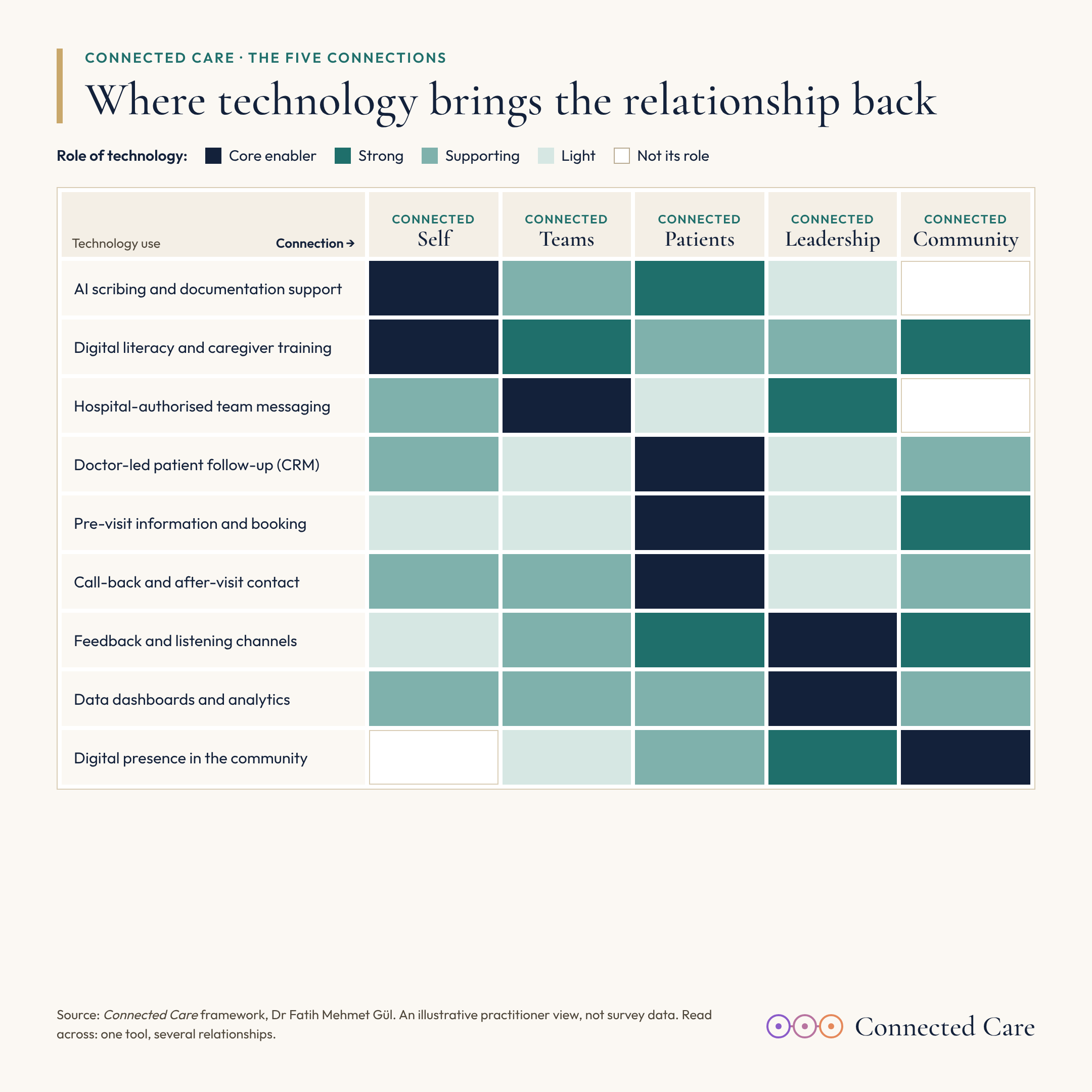
Connected Care works from the inside out. Each relationship depends on the strength of the one inside it, and technology is how we strengthen them at scale. Skip the inner rings, and the outer ones fail.
Connected Self
THE CAREGIVER WITH THEMSELVES
WHAT BREAKS
When clinicians are burned out, disconnected or digitally overwhelmed, no technology investment will succeed.
TRY THIS TOMORROW
Protect one real break per shift, and say so out loud.
WHAT TECHNOLOGY SHOULD DO
- Remove administrative work first, so time comes back
- Wellbeing and peer support that people actually use
- Digital confidence, so new tools feel like support, not surveillance
- Measure after-hours work, not only output
Connected Teams
CAREGIVER WITH CAREGIVER
WHAT BREAKS
Hospitals grow to thousands of people across shifts and sites. Handovers fail, information sits in silos and new joiners feel invisible.
TRY THIS TOMORROW
Learn the name of one new colleague this week.
WHAT TECHNOLOGY SHOULD DO
- Shared handover and care-coordination tools
- Channels for ideas and updates, not only incidents
- A staff journey designed as carefully as the patient journey
- Everyone informed, heard and recognised
Connected Patients
THE HOSPITAL WITH THE PATIENT AND FAMILY
WHAT BREAKS
Patients bank and shop on their phones, then meet phone queues, paper forms and lost instructions.
TRY THIS TOMORROW
Ask: what matters most to you today?
WHAT TECHNOLOGY SHOULD DO
- Map the journey from home to home, including how it feels
- Instructions on the channels patients already use
- Feedback treated as a conversation, not a metric
- Staff who can help patients use the tools
Connected Leadership
LEADERS WITH THEIR PEOPLE AND PURPOSE
WHAT BREAKS
Transformation is delegated to IT. Without visible, personal commitment from leaders, the culture never shifts.
TRY THIS TOMORROW
Walk one floor this week with no agenda.
WHAT TECHNOLOGY SHOULD DO
- Listening at scale, then acting on what is heard
- Recognising staff when patients mention them by name
- AI governance with clinicians at the table
- A deliberate rhythm of communication with every group
Connected Community
THE HOSPITAL WITH ITS POPULATION AND PARTNERS
WHAT BREAKS
Care too often ends at the discharge desk, while other industries stay connected with their customers every day.
TRY THIS TOMORROW
One call, 48 hours after discharge.
WHAT TECHNOLOGY SHOULD DO
- Digital check-ins after discharge, not paperwork alone
- Remote monitoring with early warning where it is needed
- Links to rehabilitation, nutrition and mental health support
- Families kept informed, in their own language
Before any new technology: eight questions
Not a procurement checklist. A filter, so that every digital investment stays in service of people.
Go deeper
The complete guide sets out the framework in a 12-minute read. The book goes further, with checklists and lessons from four countries.