
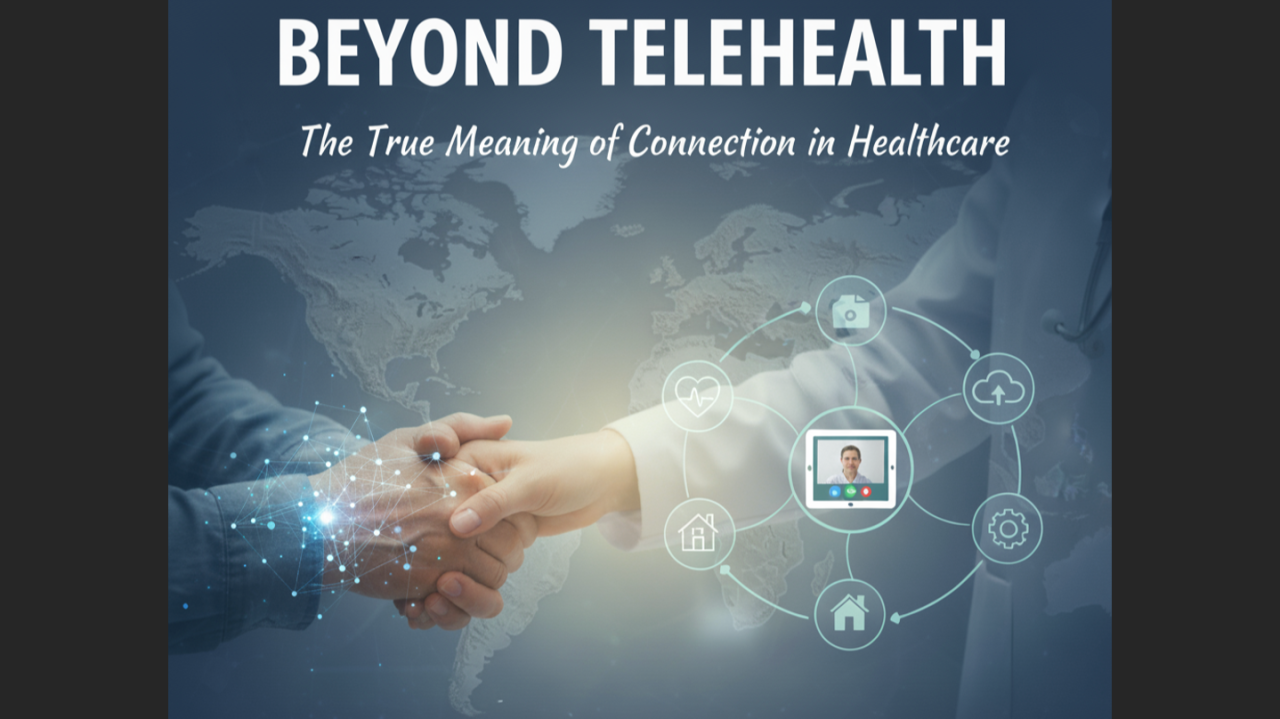
When many people hear the phrase Connected Care, they immediately think of telehealth—video consultations, prescription refills, or digital check-ins. While telehealth is powerful, reducing Connected Care to “Zoom calls with doctors” is like calling driving nothing more than turning the steering wheel. It misses the bigger picture: the journey, the safety systems, and the destination.
As I write in my forthcoming book Connected Care, “technology by itself is not enough. Without the human touch, no system can heal. But when used wisely, technology amplifies care, preserves empathy, and allows caregivers to be truly present.”
Connected Care is not a tool. It is a philosophy—a holistic, continuous journey of engagement that extends far beyond a single virtual visit.
Telehealth use exploded during COVID-19. In the U.S.:
These numbers reflect progress—but also misconceptions.
Research shows telehealth can deliver outcomes comparable to in-person care in certain contexts (palliative care, mental health, chronic disease check-ins). Yet evidence is inconsistent, especially when telehealth is used in isolation. A systematic review found results “heterogeneous and limited,” depending on condition, setting, and design.
Telehealth is a touchpoint. Connected Care is the relationship.
Connected Care is not about screens. It is about integration, continuity, and trust—seamlessly linking patients, caregivers, data, and systems into a single healing ecosystem.
From my book:
Key elements of Connected Care include:
Imagine this: A mother wakes at 2 a.m. to a sick child. Traditionally, she faces closed call centers and long waits. In a Connected Care system, she books an appointment instantly via app, reassured that care is already in motion. This isn’t just digital convenience—it’s comfort, continuity, and peace of mind.
Engaged patients follow treatment better, leading to improved outcomes. A meta-analysis shows strong links between patient engagement and treatment adherence. Hospitals that embed Connected Care consistently report higher satisfaction scores and better clinical results.
Telehomecare programs for chronic disease have achieved:
These aren’t marginal gains—they are transformational shifts in how care is delivered.
Early intervention reduces expensive emergency care and readmissions. Harvard research showed systems with strong telehealth integration had 2.7% fewer non-COVID ED visits and improved chronic medication adherence. Over time, this drives both cost savings and healthier populations.
Today’s patients live digital-first lives:
Connected Care meets people where they are—offering flexibility, personalization, and trust.
Connected Care is not about replacing doctors with machines. It is about giving doctors back their time with patients.
As I share in the book: “Technology should carry the clipboard so the doctor can hold the patient’s hand.”
When complaints are collected digitally before a visit, the physician doesn’t waste time typing. Instead, they listen. A calm word, a reassuring smile, or a moment of empathy can be as healing as the prescription itself.
Connected Care is a journey that spans home → hospital → home again.
In one of my past hospital projects, we implemented a WhatsApp pharmacy support line. Patients could clarify their medications directly with pharmacists post-discharge—reducing confusion, increasing adherence, and lowering readmissions. That is Connected Care in action.
True Connected Care requires addressing systemic barriers:
Healthcare has long lagged behind industries like retail or travel in consumer engagement. Patients don’t just want treatment anymore. They want connection.
In Connected Care, I argue that:
Telehealth was a breakthrough. Connected Care is the revolution.
Connected Care challenges us to rethink the entire care journey. It is not a product, but a promise: that no patient will feel alone between visits, that every interaction will build trust, and that technology will always serve humanity—not replace it.
When we connect better, we heal better. That is the true meaning of Connected Care.

The Home of Connected Care. Technology with Human Touch — the definitive framework for digital health transformation.
