
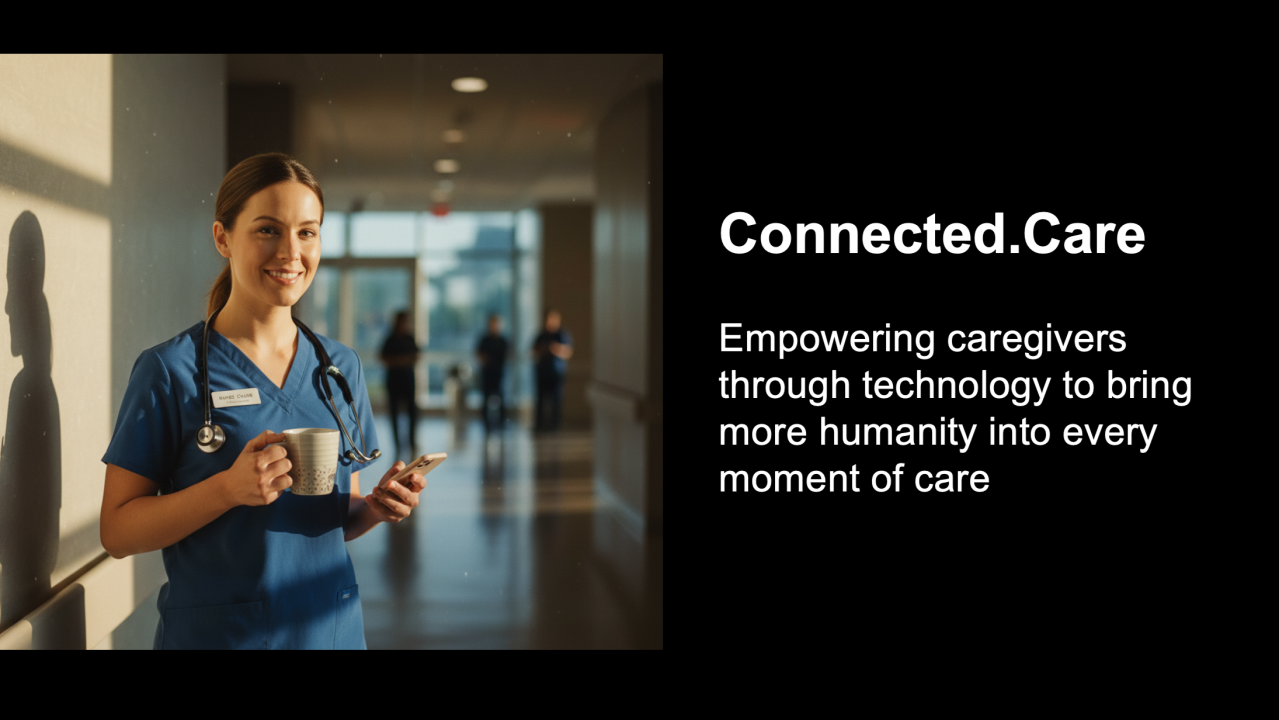
In every flight, we hear the same announcement: “Please put on your own oxygen mask before assisting others.”
It’s simple advice — but profoundly relevant to healthcare today.
As caregivers, we dedicate our days (and nights) to helping others breathe easier, live longer, and heal faster. Yet too often, we forget to protect our own oxygen supply — our mental clarity, energy, and emotional balance. The result is an epidemic of burnout that quietly erodes both the quality of care we provide and our own well-being.
In the philosophy of Connected Care, connection doesn’t begin with devices or digital dashboards. It begins with ourselves.
Before connecting patients to better outcomes, caregivers must reconnect with their own purpose, balance, and emotional health. Self-care is not a luxury for healthcare professionals — it’s a professional responsibility. Because a burned-out caregiver cannot deliver compassionate, connected care.
Healthcare technology was never meant to replace compassion. It was built to support it. Yet, for many professionals, digital tools feel like an extra layer of complexity instead of relief.
Why? Because we often skip a vital first step — learning how to use technology for our own well-being.
Today, there are countless solutions designed not only for clinical efficiency but for caregiver care:
Technology becomes empowering only when caregivers use it to make their lives easier first. Otherwise, it risks becoming one more burden in an already heavy day.
Connected Care is not only about hospitals investing in massive digital systems. It’s about individual caregivers adopting small, personal strategies that make daily work sustainable.
A hospital can only be as connected, resilient, and human as the people who power it.
When nurses, doctors, and allied health professionals learn to use technology for themselves — to plan better, think clearer, and find calm — they create a ripple effect. Their patients feel the difference immediately.
If you are a healthcare professional reading this — how do you manage your stress and prevent burnout?
Do you use any digital tools that genuinely help you organize, unwind, or reconnect with your purpose? What has worked — and what hasn’t?
Share your experiences. Let’s start an honest conversation about caring for ourselves, so we can continue caring for others — with empathy, presence, and strength.
Connected Care begins with you. Put on your own oxygen mask first — then help the world breathe.

The Home of Connected Care. Technology with Human Touch — the definitive framework for digital health transformation.
