
We’ve all been there.
You wait three weeks for a specialist appointment. You take time offwork, fight traffic, and sit in a waiting room for forty minutes. When youfinally get into the exam room, you spend a precious seven minutes with aphysician who seems more focused on their computer screen than on you.
As they type furiously, their face obscured by the monitor, it’s easy tofeel like a collection of data points rather than a person in need of care.
This experience fuels a common belief: Technology is makinghealthcare colder, more impersonal, and less human.
But after years of researching what I call "Connected Care,"I’ve come to a conclusion that many find counter-intuitive:
Thevery technology creating this distance holds the key to restoring the humantouch.
We are currently at a crossroads. We can either continue to usetechnology as a digital filing cabinet that buries our clinicians, or we canuse it as a bridge.
Here are the five surprising truths that challenge everything we thinkwe know about the intersection of medicine and machines.
1.Technology’s Real Job is to Make Healthcare More Human
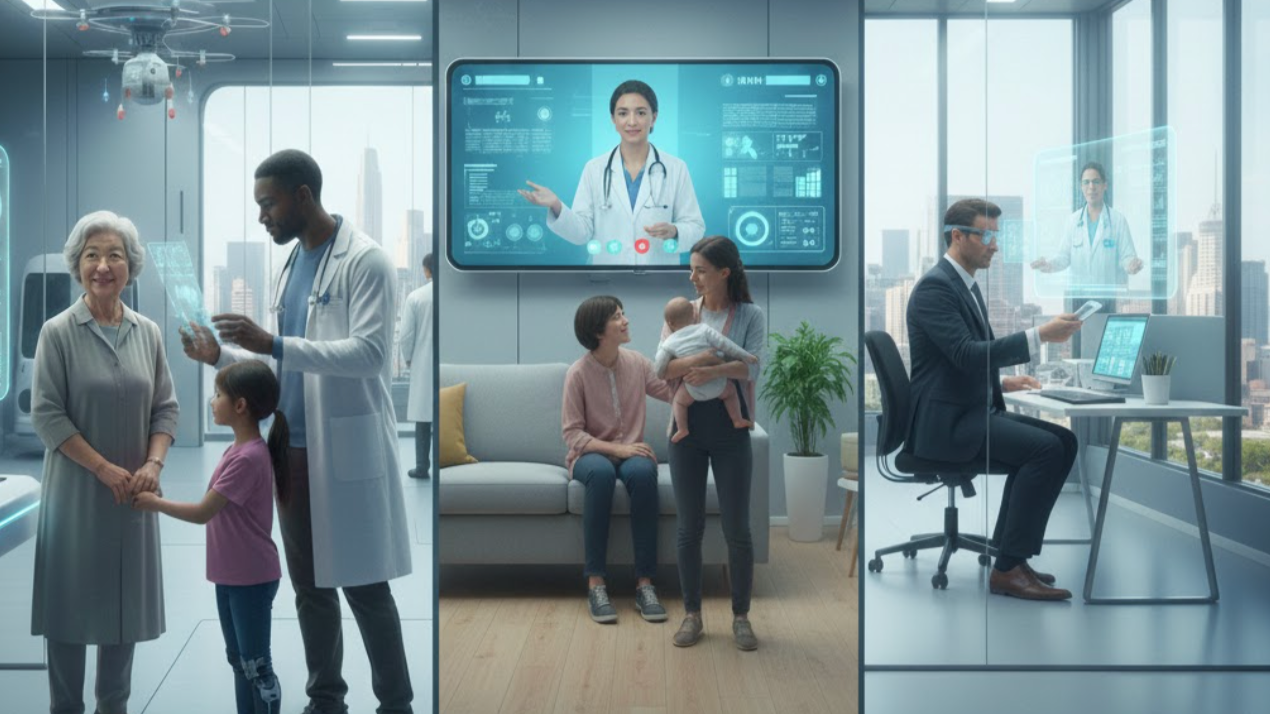
It sounds like a paradox: to restore human connection, we need more technology, not less.
The core crisis in modern medicine isn't a lack of skill; it's a lack oftime. Currently, administrative burdens—note-taking, billing, andcoding—consume nearly half of a caregiver's day.
Connected Care isn't about replacing doctors with robots. It’s about liberation.
By offloading repetitive, mechanical tasks to AI and automation, we freeup caregivers to do what only humans can do: provide empathy, listen actively,and build trust. When the machine handles the data, the doctor can finally lookthe patient in the eye.
2.The Pandemic Didn’t Fix Digital Health—It Exposed the Cracks
There is a popular narrative that COVID-19 accelerated healthcareinnovation by a decade. The data tells a different story.
Post-pandemic, we’ve seen a 57% year-over-year dropin global digital health funding. M&A activity has plummeted. Thisisn't just a market correction; it’s a bubble bursting.
The "scramble to digitize" in 2020 was driven by temporarysolutions to an immediate crisis. Now that the hype has faded, we are left withthe realization that meaningful transformation is a marathon, not a sprint. Wedon't need more "apps"; we need integrated ecosystems.
3.Healthcare Suffers from a "Curse of Intelligence"
Why do brilliant innovations fail in the real world?
In my research, I’ve found that healthcare is filled with highlyintelligent, solution-oriented professionals who often jump to an answer beforedeeply understanding the user's environment. I call this the Curse of Intelligence.
Consider the real-world failure of the "innovative"touchscreen defibrillator. On paper, it was sleek and modern. In practice, itwas a disaster. Designers forgot that in an emergency, medics often have wethands or are wearing gloves, rendering a touchscreen useless.
True innovation requires empathy for the end-user's context. If a systemfails to care for the person using the tool, the tool will fail the patient.
4.The First Person to Receive "Connected Care" Must Be the Caregiver
We often talk about "patient-centric" care, but we forget afundamental truth: You cannot pour from an empty cup.
Physician burnout is a global epidemic. A truly connected system mustfirst care for its own. When we look at successful programs like CorewellHealth’s "BeWellMed," the results are staggering. By providingemotional and digital wellness support to staff, they saw a 73% improvement in well-being scores and a 59% reduction in turnover.
In healthcare, the "oxygen mask rule" applies. If we don'tconnect the caregiver to their own well-being first, they will never have thecapacity to connect with the patient.
5.The Hospital of the Future Isn't a Building
For a century, the hospital has been a reactive facility—a place you goonly when something is broken.
The future of Connected Care reframes the hospital as a proactive community hub. Its responsibility mustextend beyond its physical walls. By using remote monitoring and digital"ongoing dialogues," hospitals can move from treating sickness toactively promoting wellness.
The goal is to transform the hospital from an isolated institution intoa lifelong partner in a community’s health journey. In 2030, the mostsuccessful hospitals will be the ones that keep people out of theirbeds.
TheBottom Line
The transition from "Digital Transformation" to "HumanConnection" is the most important shift our industry will ever make.
Technology should not be a wedge; it must be the tool that removes theadministrative noise, allowing the deeply human work of healing to take centerstage.
Thedoctor will see you now. And this time, they might actually see you.
#ConnectedCare #DigitalHealth #FutureOfHealthcare #HealthTech #Founders#HealthInnovation

The Home of Connected Care. Technology with Human Touch — the definitive framework for digital health transformation.
